
Introduction
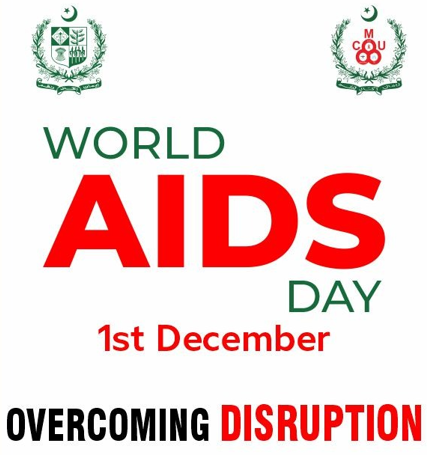
World AIDS Day 2025 marks a critical moment for global reflection and reaffirmation of our collective commitment to ending AIDS as a public health threat. Despite major advances over the past decades, many people still face disruptions in accessing prevention, treatment and support services. The World Health Organization’s 2025 call to action reminds us of the urgency to overcome service gaps, strengthen health systems, and place human rights at the centre of the response. This year’s focus inspires us to rebuild, rethink and rise together so that no individual or community is left behind.
Rebuilding Health Systems and Access to Care
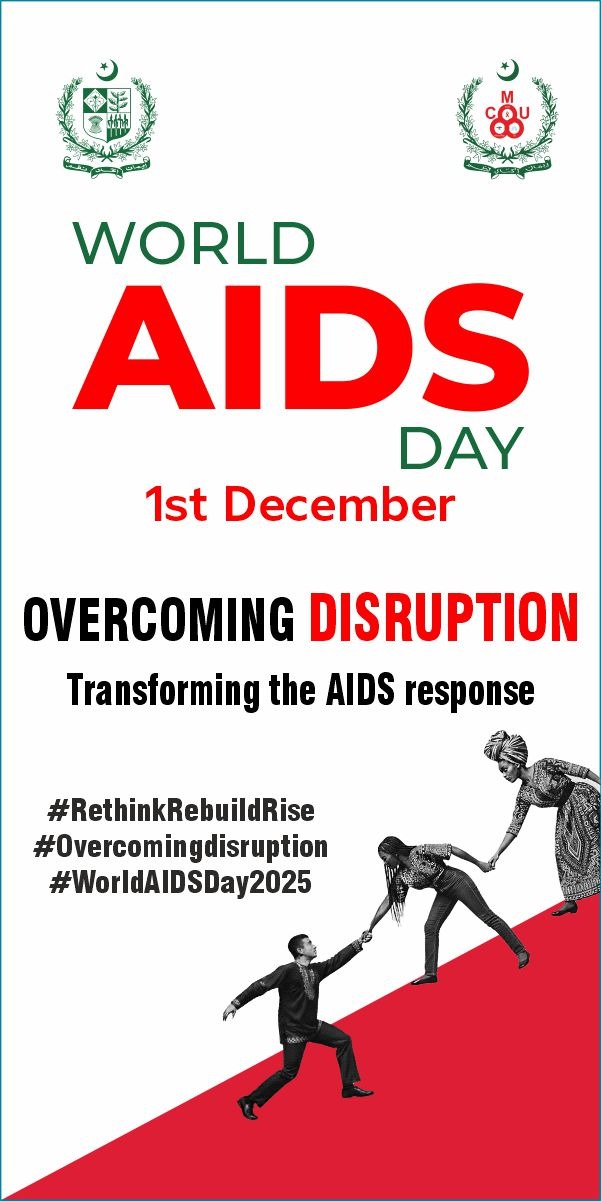
Across many regions, persistent inequalities, funding limitations and service disruptions continue to affect timely access to HIV testing, treatment and prevention. Rebuilding requires strong, community-rooted health systems that can deliver reliable care even during crises. Integrated programmes that link HIV, STI, hepatitis and maternal health services are essential for sustained progress. Durable financing, committed leadership and coordinated action remain key to ensuring that individuals and communities receive consistent, high-quality care.
Pakistan’s Progress Through CMU and the Global Fund Partnership
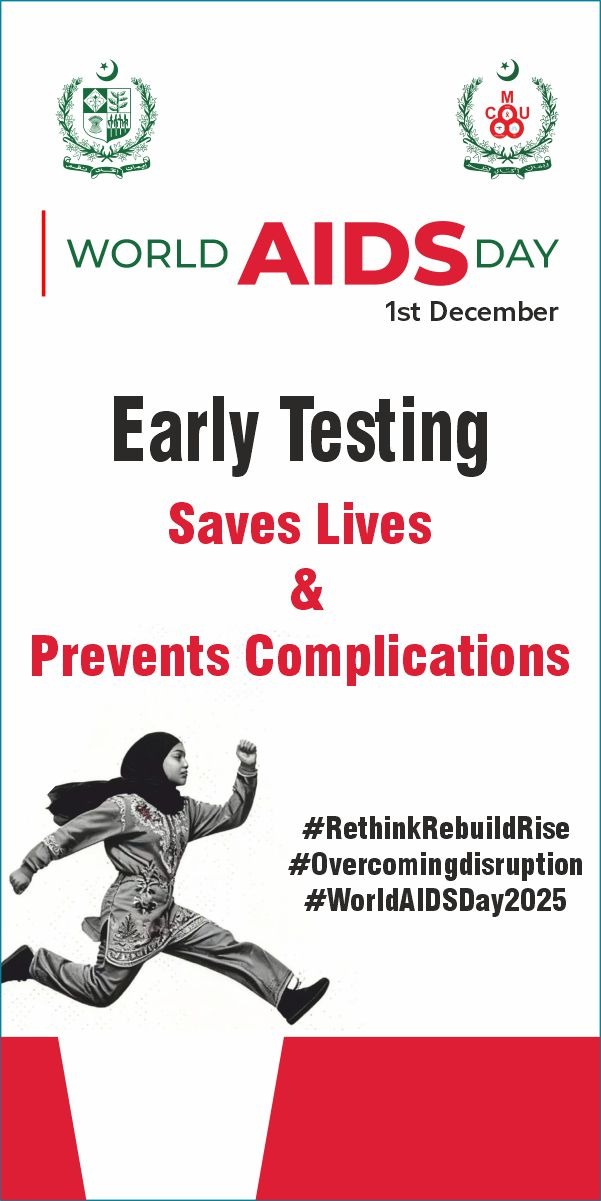
In Pakistan, the Common Management Unit (CMU) for Global Fund (HIV/AIDS, TB & Malaria), under the Ministry of National Health Services, Regulations & Coordination along with key partners like WHO, UNAIDS, APLHIV, UNDP, UNICEF, UNODC, and USAID along with provincial partners, has played a central role in strengthening the national HIV response. Through well-coordinated provincial and federal efforts, Pakistan has expanded HIV testing and treatment centres, improved access to ARVs, strengthened surveillance systems, and enhanced community outreach. The partnership has also supported innovative digital health tools, better data-driven decision-making, and the integration of HIV services within wider public health programmes. This collective commitment demonstrates how strong governance, sustained donor support and technical expertise can transform the national response and ensure continuity of essential services.
Rethinking the HIV Response With Innovation and Inclusion
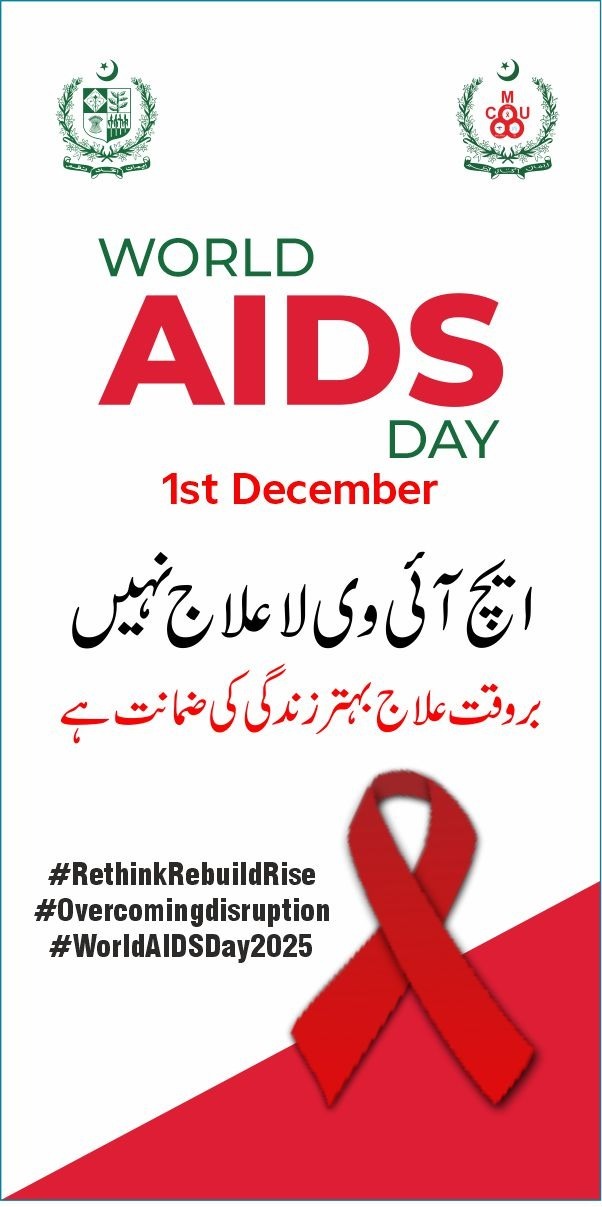
The global call to expand self-testing, digital tools and community-based service delivery reflects a growing shift toward more accessible and inclusive HIV programming. Rethinking also means removing structural barriers such as stigma, discrimination, gender inequality and criminalization of certain behaviours, which often prevent people from seeking care. Transforming the HIV response requires policies that protect dignity, confidentiality and equity. When communities are empowered as partners, innovation becomes meaningful and impactful.
Rising Against Stigma and Social Inequalities
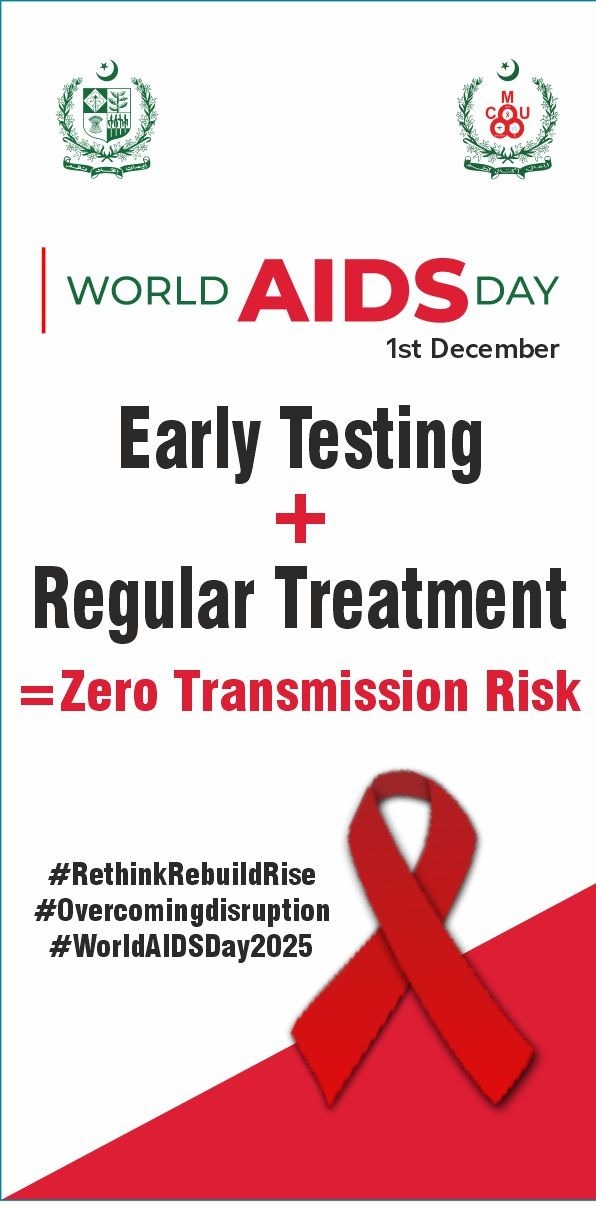
Stigma remains one of the most significant obstacles to ending AIDS. People living with HIV still encounter judgement, fear and exclusion in healthcare facilities, schools, workplaces and neighbourhoods. Rising against stigma involves promoting accurate information, building compassion and ensuring that every person receives respect and confidentiality. A supportive, stigma-free environment encourages individuals to test early, adhere to treatment and participate fully in daily life. Ending stigma is essential for both individual wellbeing and national progress.
A Shared Responsibility Toward an AIDS-Free Future
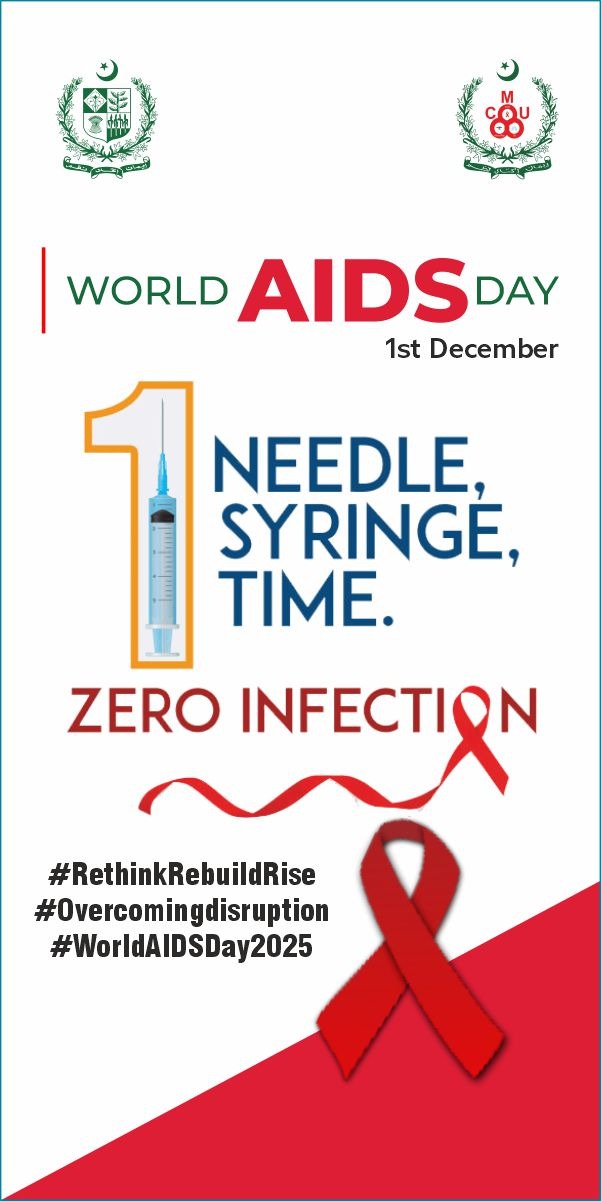
World AIDS Day 2025 is a reminder that progress depends on collective action. Governments must continue prioritizing resilient health systems, civil society must amplify the voices of affected communities and individuals must commit to compassion, respect and understanding. Ending AIDS requires a united approach grounded in justice, inclusion and solidarity. The values of rebuilding, rethinking and rising together provide a pathway toward a future where prevention, treatment and care are accessible for all.
Conclusion
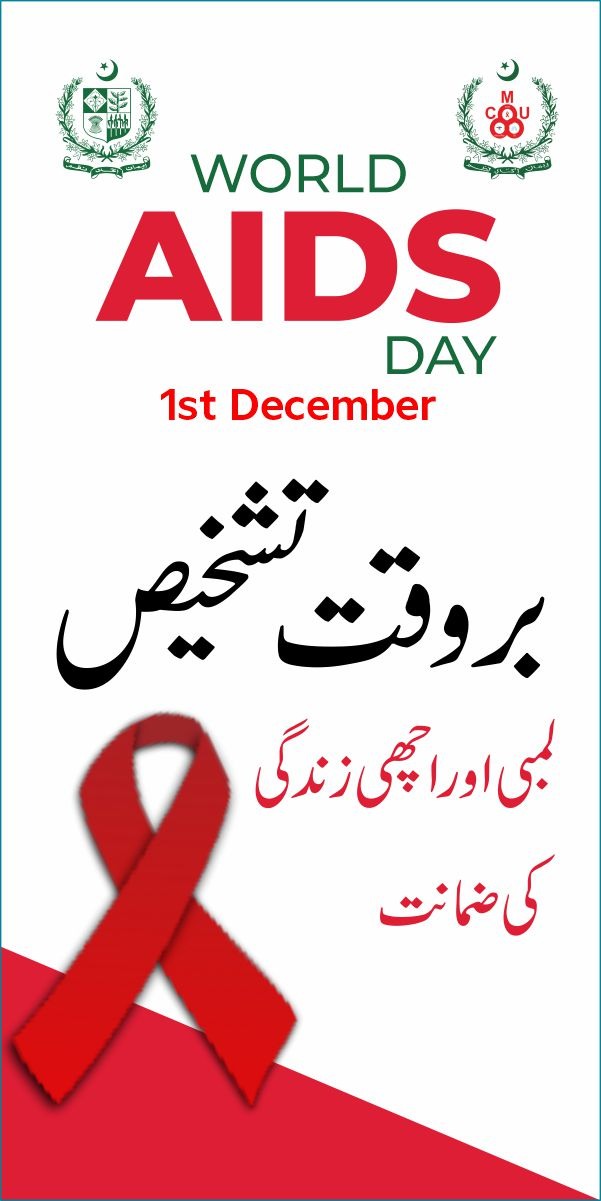
As the world reflects on the milestones and remaining challenges of the HIV response, the message of World AIDS Day 2025 is clear: disruptions must not determine our future. With strengthened systems, innovative strategies and continued collaboration between national institutions like CMU, global partners such as the Global Fund, and communities across Pakistan, an AIDS-free generation is possible. Let this day remind us of our responsibility to safeguard health, dignity and equality for every person. Together, we can rebuild awareness, rethink harmful norms and rise toward a stronger, more inclusive future.
#RebuildRethinkRise #OvercomingDisruption